Question 1Which of these describes the high and low of sound?A.DurationB.Harmony C.Intensity D.Pitch E.TimbreObjective Show full explanation
Question 4Identify the staff which has ‘b’ as its 3rd lineA.AltoB.BassC.Soprano D.TenorE.TrebleObjective Show full explanation
Question 5Which of these notes has 4 beats?A.Allabreve B.Crotchet C.MinimD.Quaver E.SemibreveObjective Show full explanation
Question 7The first ledger line above the treble staff is named A.AB.CC.DD.EE.FObjective Show full explanation
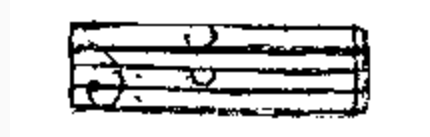
Question 8What is the interval below?A.fifth B.fourthC.octaveD.secondE.thirdObjective Show full explanation
Question 9Identify the non-transposing instrument among theseA.clarinet B.fluteC.French hornD.saxophoneE.trumpetObjective Show full explanation
Question 11Sound is produced in trumpet byA.bestingB.blowingC.pluckingD.shakingE.strikingObjective Show full explanation
Question 12The recorder instrument is classified asA.brassB.keyboardC.percussionD.stringE.woodwindObjective Show full explanation
Question 13Which of these times is simple duple?A.2/6B.3/4C.6/4D.4/4E.2/4Objective Show full explanation
Question 15Which of these notes is called “whole note”?A. B. C. D. E. Objective Show full explanation
Question 16The sign “>” means “getting ___________”A.fasterB.interestingC.louderD.slowerE.softerObjective Show full explanation
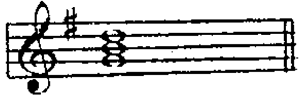
Question 19Which major key does the music below represent?A.BB.DC.ED.FE.GObjective Show full explanation
Question 20A triad consists of ________ notes(s)A.fiveB.fourC.oneD.threeE.twoObjective Show full explanation
Question 21The plagal cadence is __________A.I - VB.II - IVC.IV - ID.IV - VE.V – IObjective Show full explanation
Question 22Identify a two phrase musicA.Binary B.DuetC.RondoD.Ternary E.TrioObjective Show full explanation
Question 23The change of key in a piece of music isA.harmonyB.modulationC.pitch bendD.transcriptionE.transposing Objective Show full explanation
Question 24The type of music used during church service is A.ariaB.martialC.operaD.sacredE.secularObjective Show full explanation
Question 25Which of these notes has the same sound as F#?A.BbB.CC.D#D.EE.GbObjective Show full explanation
Question 26Identify the accidential used to raise the pitch of note by a semitoneA. B. C. D. E. Objective Show full explanation
Question 27The same tune singing is A.chorusB.duetC.quartet D.soloE.unison Objective Show full explanation
Question 28The ‘Agogo’ is a ________ instrumentA.concrete B.cottonC.metalD.skinE.woodenObjective Show full explanation
Question 30Which of these means “slow pace”?A.Adante B.AllegroC.Crescendo D.Decrescendo E.Sforza do Objective Show full explanation
Question 31Sacred music is used for _______ purpose?A.educational B.informationC.political D.religious E.socialObjective Show full explanation
Question 32A ‘Dirge’ is used in/atA.advertisement B.birthday C.burial D.educatingE.entertainment Objective Show full explanation
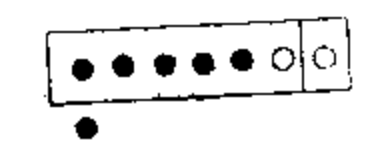
Question 33The recorded diagram below when blown producesA.CB.DC.ED.FE.GObjective Show full explanation
Question 34G.F. Handel lives in the ____________ periodA.baroqueB.classical C.renaissance D.rococoE.romantic Objective Show full explanation
Question 35Who among these composers became deaf?A.Beethoven B.ChopinC.HandelD.Mendelssohn E.MozartObjective Show full explanation
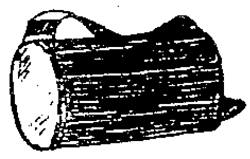
Question 36The instrument below is classified asA.aerophoneB.cacophoneC.chordophoneD.idiophone E.membranophone Objective Show full explanation
Question 37The “Ekwe” produces sound byA.blowing B.bowingC.plucking D.shaking E.strikingObjective Show full explanation
Question 38The most important material for making a chordophone is A.gourdB.leather stringC.metalD.plastic E.woodObjective Show full explanation
Question 39Identify an Aerophone among theseA.agidigboB.bataC.kakakiD.koriaE.uduObjective Show full explanation
Question 40The instrument below is common played among theA.Efiks B.Hausas C.IgbosD.NupesE.Yorubas Objective Show full explanation
Question 41Drama is said to have originated from _________ beliefs/conceptsA.African B.EuropeanC.Greco-RomanD.GreekE.RomanObjective Show full explanation
Question 42The character that opposes the major character in a play is called a/anA.actoB.antagonistC.heroine D.protagonist E.tragic heroObjective Show full explanation
Question 43Which of the following is common to all forms of literature?A.ActionB.ChorusC.LanguageD.NarrationE.SceneObjective Show full explanation
Question 44The state of anxiety and expectation in the reader/audience in any work of art is calledA.climaxB.conflict C.dramatic irony D.suspenseE.tensionObjective Show full explanation
Question 45Which of the following gives additional information to the audience? A.chorus B.clownC.costume D.prompter E.propsObjective Show full explanation
Question 46The principal antagonist in a play is known as theA.buffoonB.heroC.playwright D.protagonist E.villainObjective Show full explanation
Question 47The primary function of comedy is toA.create laughterB.criticize C.heighten D.lament E.praiseObjective Show full explanation
Question 48The main effect of tragedy on the audience is A.anxietyB.happiness C.laughter D.pityE.suspenseObjective Show full explanation
Question 49The panic an actor has while facing an audience on the stage is calledA.anxiety B.stage fearC.stage fright D.stage tensionE.weaknessObjective Show full explanation
Question 50A group of people who maintains stage materials is calledA.cast partyB.costumiers C.designersD.prompters E.stage handsObjective Show full explanation