Question 0The process in which complex substances are broken down into simpler ones is referred to asA.anabolismB.catabolismC.metabolismD.tropismE.Objective Show full explanation
Question 0The organ which is sensitive to light in Euglena is theA.gulletB.flagellumC.chloroplastD.eyespotE.Objective Show full explanation
Question 0The organelles present in cells that are actively respiring and photosynthesizing areA.lysosomes and ribosomesB.Golgi apparatus and endoplasmic reticulumC.nucleus and centriolesD.mitrochondria and chloroplastE.Objective Show full explanation
Question 0Which of the following describes a characteristic of arthropods?A.The organism finds it easy to grow freelyB.the organism has a pair of jointed appendagesC.the body is not divided into a number of segments segD.the body is covered by chitinE.Objective Show full explanation
Question 0Which of the following distinguishes a butterfly from a moth?A.the wings of butterfly rest horizontally but those of moth rest verticallyB.Both are active during the dayC.they have similar antennaeD.the abdomen of moth is fatter than that of butterflyE.Objective Show full explanation
Question 0Which of the following types of feathers is used for flight in birds?A.QuillB.FiloplumeC.covertD.DownE.Objective Show full explanation
Question 0The plants that grow in deserts or very dry areas are referred to asA.mesophytesB.hydrophytesC.epiphytesD.xerophytesE.Objective Show full explanation
Question 0Which of the following is the simplest living organism?A.ParameciumB.VirusC.AmoebaD.ChlamydomonasE.Objective Show full explanation
Question 0Proboscis is a structure that is mostly found inA.insectsB.tapewormsC.amphibiansD.mollusesE.Objective Show full explanation
Question 0The structural adaptation of desert plants for water conservation isA.broad leaves with numerous stomataB.spongy mesophyllC.spiny leavesD.prominent stomata in leavesE.Objective Show full explanation
Question 0The long and sharp clawed feet of birds is an adaptation forA.crushing seedsB.scooping mudC.tearing fleshD.grasping preyE.Objective Show full explanation
Question 0During the manufacture of food by plants, which of the following organism use energy from the sun?A.anabaenaB.sulfur bacteriaC.nitrosomonas spD.nitrobacter spE.Objective Show full explanation
Question 0Movement of minerals and chemical compounds with a plant occurs duringA.osmosisB.translocationC.transpirationD.diffusionE.Objective Show full explanation
Question 0The enzyme that is present in the saliva isA.renninB.lipaseC.pepsinD.ptyalinE.Objective Show full explanation
Question 0Plants that have special devices for trapping and digesting insects areA.carnivorousB.symbioticC.parasiticD.saprophyticE.Objective Show full explanation
Question 0The process of transforming the chemical energy of cellular fuels into the high energy bonds of ATP in plants isA.autotrophismB.photosysnthesisC.photolysisD.respirationE.Objective Show full explanation
Question 0Fungi are referred to as hetotrophs because theyA.are filamentousB.lack chlorophyllC.have myceliumD.lack rootsE.Objective Show full explanation
Question 0An example of a parasitic protozoan isA.ParameciumB.PlasmodiumC.EughlenaD.ChlamydomonasE.Objective Show full explanation
Question 0Which blood cell are involved in the immune response of vertebrates?A.PhagoecytesB.lymphocytesC.erythrocytesD.monocytesE.Objective Show full explanation
Question 0The blood circulatory system of vertebrates consists ofA.heart, arteries, capillaries and veinsB.heart, aorta, capillaries and veinsC.heart, aorta, arteries and veinsD.heart, vena cava, arteries, and veinsE.Objective Show full explanation
Question 0A plant tissue that carries water and mineral salts is theA.cambiumB.xylemC.cortexD.phloemE.Objective Show full explanation
Question 0Which of the following helps in the clotting of blood?A.Red blood cellsB.White blood cellsC.PlasmaD.PlateletsE.Objective Show full explanation
Question 0The part of the mammalian skin involved in excretion is theA.sweat glandsB.malpighian layerC.sebaceous glandD.horny layerE.Objective Show full explanation
Question 0Which of the following forms about 55% of the volume of the blood in man?A.leucocytesB.plateletsC.plasmaD.erythrocytesE.Objective Show full explanation
Question 0Which of the following is a waste product of an insect?A.AlkaloidsB.Uric acidC.SweatD.MucilageE.Objective Show full explanation
Question 0The main structure in vertebrates that supports and protects the body is theA.skeletonB.ligamentC.muscleD.jointE.Objective Show full explanation
Question 0The chitin in the exoskeleton of many arthropods is strengthened byA.lidsB.proteinsC.calcium compoundsD.organic saltE.Objective Show full explanation
Question 0The transfer of pollen grains from the anther to a sigma isA.propagationB.placentationC.pollinationD.fertilizationE.Objective Show full explanation
Question 0The male reproductive organ of a flower is theA.carpelB.stamenC.petalD.sepalE.Objective Show full explanation
Question 0The gland that is found just below the hypothalamus is theA.parathyroidB.adrenalC.pituitaryD.thyroidE.Objective Show full explanation
Question 0The most important plant hormone isA.cytokininB.abscisic acidC.auxinD.gibberellinE.Objective Show full explanation
Question 0The sensory cell that responds to dim light is referred to as theA.coneB.lensC.rodD.irisE.Objective Show full explanation
Question 0The absence of anti-diuretic hormone in humans results inA.decreasing dehydrationB.drastic dehydrationC.eliminating dehydrationD.increasing dehydrationE.Objective Show full explanation
Question 0Oestrogen is a hormone that is synthesized in theA.ovariesB.testesC.anterior pituitaryD.adrenal cortexE.Objective Show full explanation
Question 0The eye defect cause by the development of cloudy areas in the lenses isA.presbyopiaB.glaucomaC.cataractD.astigmatismE.Objective Show full explanation
Question 0A pollutant that is biodegradable isA.crude oilB.heavy metalsC.cellophaneD.sewageE.Objective Show full explanation
Question 0A tropical disease caused by Trypanosoma isA.sleeping sicknessB.river blindnessC.yellow feverD.malariaE.Objective Show full explanation
Question 0The solid part of the ecosystem is referred to as theA.atmosphereB.hydrosphereC.biosphereD.lithosphereE.Objective Show full explanation
Question 0Which of the following is caused by Treponema palladium?A.GonorrheaB.LeprosyC.TuberculosisD.SyphilisE.Objective Show full explanation
Question 0To which blood group do universal recipients belong?A.BB.AC.OD.ABE.Objective Show full explanation
Question 0The clumping together of red blood cells isA.agglutinationB.fussionC.transfusionD.compatibilityE.Objective Show full explanation
Question 0Physiological adaptation to very dry conditions in animals demonstratesA.rejuvenationB.xeromorphismC.hibernationD.aestivationE.Objective Show full explanation
Question 0One of adaptation of Cactus opuntia to conserve water is the reduction ofA.internodesB.stem to leavesC.leaves to spineD.flower sizeE.Objective Show full explanation
Question 0Which of the following structure is adapted for feeding in a bird of prey?A.Hooked break and sharp clawsB.Smooth beak and strong clawsC.Big beaks and strong feetD.Pointed beak and strong clawsE.Objective Show full explanation
Question 0The special pigment for colour change in chameleon isA.melaninB.carotenoidC.chromatinD.chromatophoreE.Objective Show full explanation
Question 0The behavioural adaptation in social insects could best be described asA.symbiosisB.saprophytismC.parasitismD.commensalismsE.Objective Show full explanation
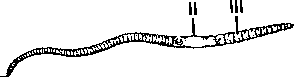
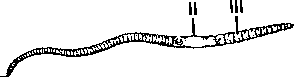
Question 0In the diagram, the structure labelled II is theA.spermathecal poreB.cocoonC.clitellumD.chaeteaE.Objective Show full explanation
Question 0The organism is found in soils rich inA.mudB.humusC.clayD.sandE.Objective Show full explanation