(a) Write the full meaning of the acronyms of the following non-governmental agricultural organizations:
(i) WARDA;
(ii) IITA;
(iii) FAO;
(iv) ILCA.
(b) Mention six ways in which agriculture is of benefit to rural communities.
(c) List four liming materials used in agriculture.
(d) Give four examples of sedimentary rocks.
WAEC Agricultural Science 2019 Past Questions
Practice each question, then open it to see the full details.
(a) (i) Name the disease associated with the observed symptoms.
(ii) List three ways of controlling the disease named in 2(a)(i).
(b) (i) State three pests of cocoa.
(ii) State three ways of controlling the pests mentioned in 2(b)(i).
(c)Enumerate five factors to be considered in siting a crop farm;
(d) Mention three ways of maintaining survey equipment.
(a) (i) Define the term drainage.
(ii) State four reasons why waterlogged agricultural land should be drained.
(b)List six factors affecting nutrient availability in the soil.
(c) Complete the table below on the causative organisms of crop diseases.
| Disease | Causative Organism |
|---|---|
| Rice blast | (i) |
| Groundnut rosette | (ii) |
| Cassava mosaic | (iii) |
| Root knot of tomatoe | (iv) |
| Maize rust | (v) |
| Tristeza | (vi) |
(a) (i) Differentiate between intensive system and extensive system of livestock management.
(ii) State five disadvantages of keeping livestock on free range system.
(b) State six ways in which ornamental plants are important.
(a) Explain the following terms as used in animal production:
- Malnutrition
- Weaning
- Heat period
- Candling
(b)Distinguish between maintenance ration and production ration in animal nutrition.
(c)State three effects of malnutrition on farm animals.
(d)State five effects of deforestation.
(a) What is depreciation in agricultural production?
(b) Distinguish between the following pairs of terms as used in agricultural production:
(i) farm records and farm accounts;
(ii) credit and subsidy;
(iii) assets and liabilities.
(c) State five problems of agricultural extension in West Africa.
(d) Enumerate five factors that affect the supply of cassava in West Africa
(a) Explain four roles of government in agricultural development under the following
headings:
(i) pest and disease control;
(ii) marketing of agricultural produce.
(b) Give four general problems of land tenure system in agricultural development in West
Africa.
(c)List three farm machinery and three farm implements.
(a) Complete the table below.
|
Weed Botanical name |
Method of dispersal |
|
|
Goat weed |
|
|
|
Siam weed |
|
|
|
Water leaf |
|
|
(b) List three examples of each of the following factors affecting land availability for
agriculture:
(i) physical factors;
(ii) economic factors.
(c) Enumerate four effects of pollution on agricultural lands and ponds.
(d) State two ways of minimizing land and pond pollution.
(a) Using the table below, classify the following crops based on their life cycle.
|
Crop Classification based on life cycle |
|
|
Mango |
|
|
Rice |
|
|
Groundnut |
|
|
Cotton |
|
|
Pepper |
|
|
Soya bean |
|
|
Oil palm |
|
|
Yam |
|
|
Tomato |
|
|
Rubber |
|
|
Ginger |
|
|
Cocoa |
|
|
Cowpea |
|
|
Carrot |
|
(b) List four components of a typical soil with their percentage volume.
|
Soil component |
Percentage volume |
|
(i) |
|
|
(ii) |
|
|
(iii) |
|
|
(iv) |
(c) State three methods of applying inorganic fertilizers to the soil.
(a) Distinguish between spacing and thinning in crop production.
(b) Discuss the cultivation of oil palm under the following headings:
(i) botanical name;
(ii) two varieties;
(iii) method of propagation;
(iv) soil requirement;
(v) spacing on the field;
(vi) Diseases.
(c) Enumerate six ways in which forest resources are important to the economy of West Africa.
(d) What is apiculture?
a) Explain each of the following terms as used in animal production:
(i) flushing;
(ii) castration;
(iii) culling.
(b) Mention two advantages of each of the terms in 5 (a).
(i) Flushing;
(ii) Castration;
(iii) Culling.
(c) Give two uses of each of the following survey equipment:
(i) prismatic compass;
(ii) measuring tape.
(d) Differentiate between the terms floriculture and aquaculture.
(a) A farmer purchased a tractor in the year 2000 for D 12, 000.00. In 2009, the tractor was
sold for D 3,000.00 as it was no longer economical to keep. Calculate the:
(i) useful life of the tractor;
(ii) salvage value of the tractor;
(iii) total depreciation of the tractor;
(iv) annual depreciation of the tractor.
(b) Describe the following terms as used in agricultural economics:
(i) demand schedule;
(ii) supply curve.
(c) List four agricultural extension agencies in West Africa.
(d) State four ways through which soils are enriched with nitrogen.
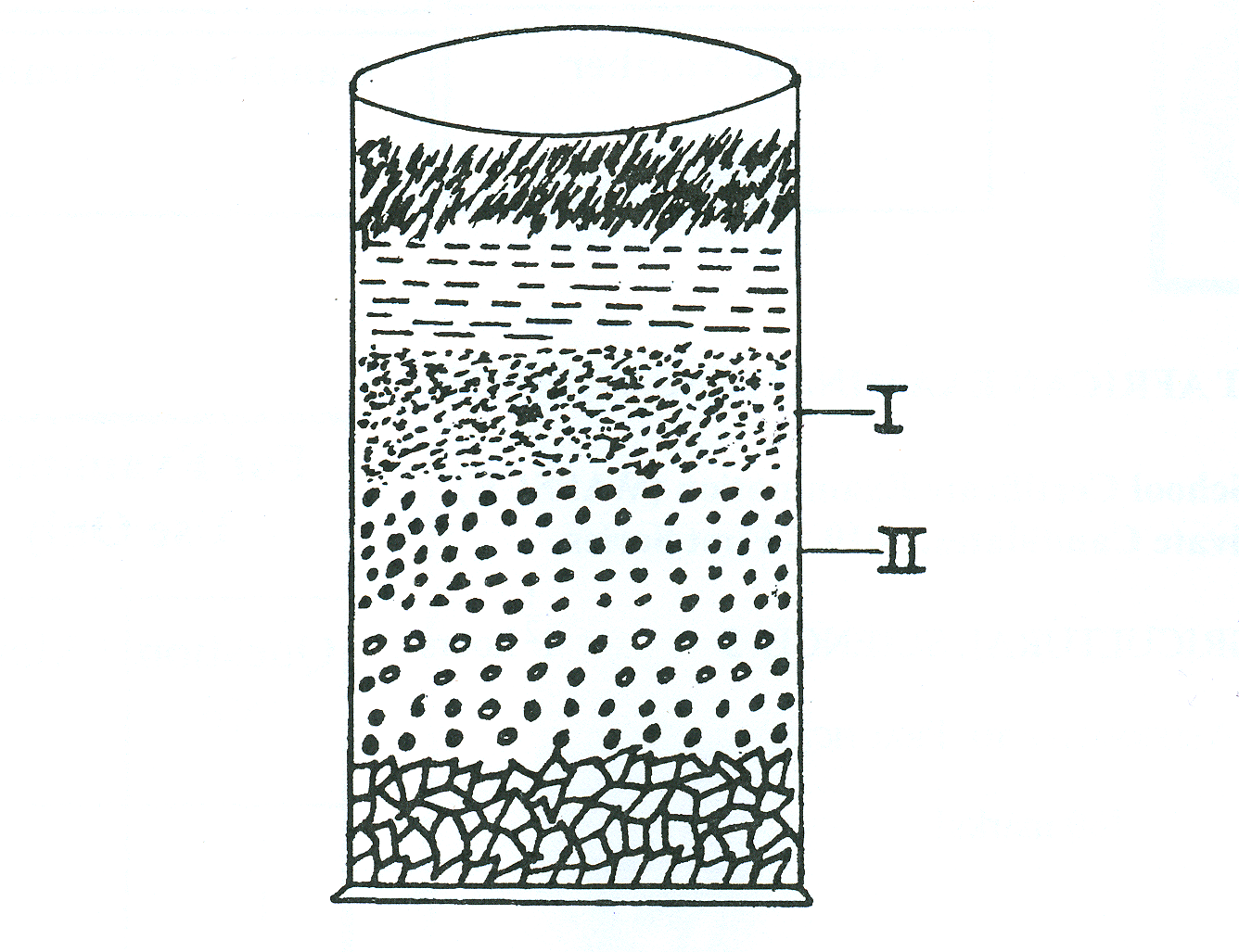
The diagram below illustrates an experimental set-up on soil. Study it and answer the questions that follow.
a) (i) State the aim of the experiment.
(ii)Name the parts labelled I and II in the diagram.
b) Describe how the experiment is carried out.
c) State four properties of sandy soils.
d) Describe a test for soil acidity using litmus paper.

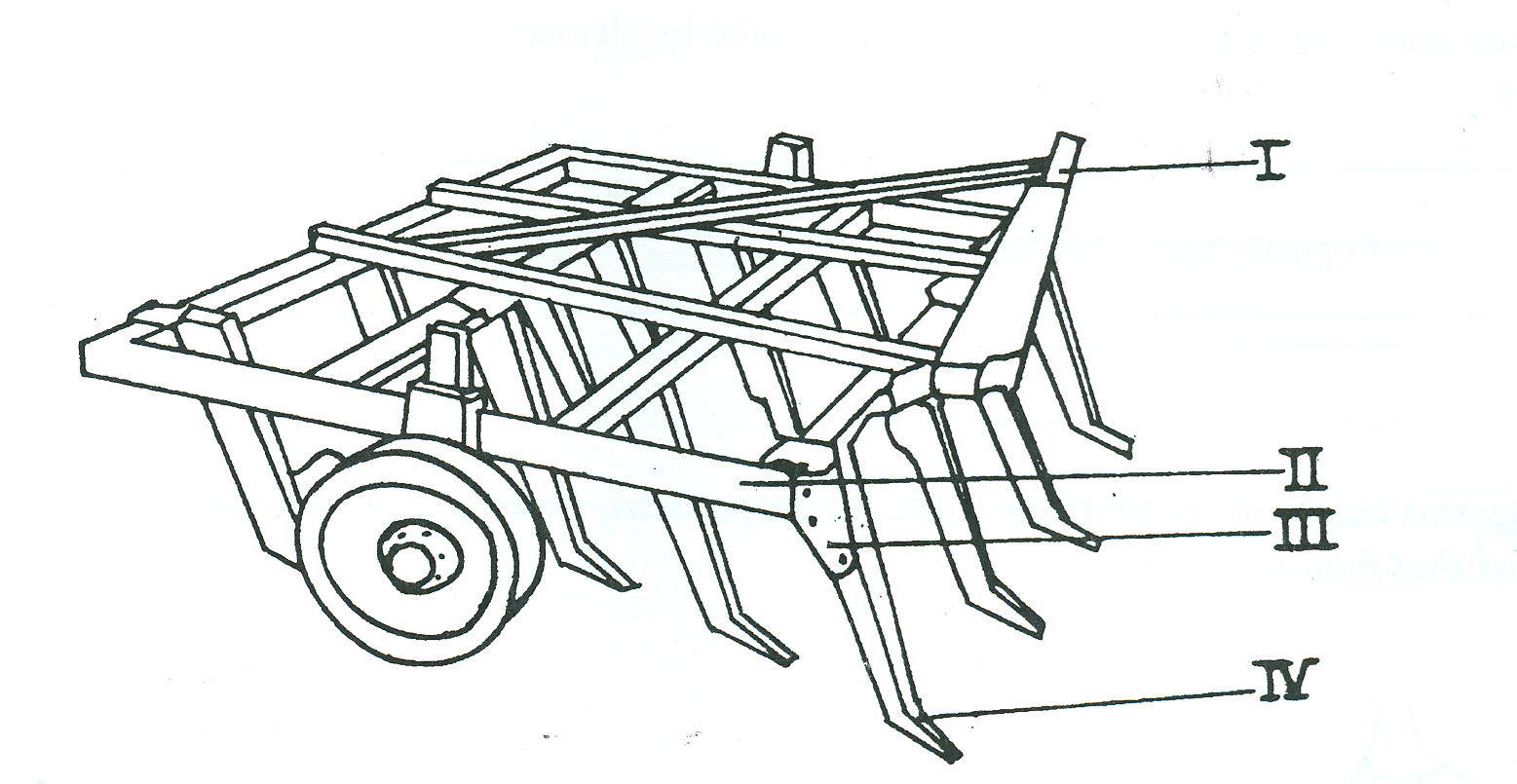
Study the farm implement illustrated below and answer the questions that follow.
a) Identify the farm implement illustrated.
(ii)Name the parts labelled I and II III IV in the diagram.
b) State one function of each of the parts labelled I, II, III and IV.
c) Mention the farm operation for which the illustrated implement is used.
d) List two farm tools that can perform similar functions as the illustrated implement.
e) State three ways of maintaining the illustrated implement.

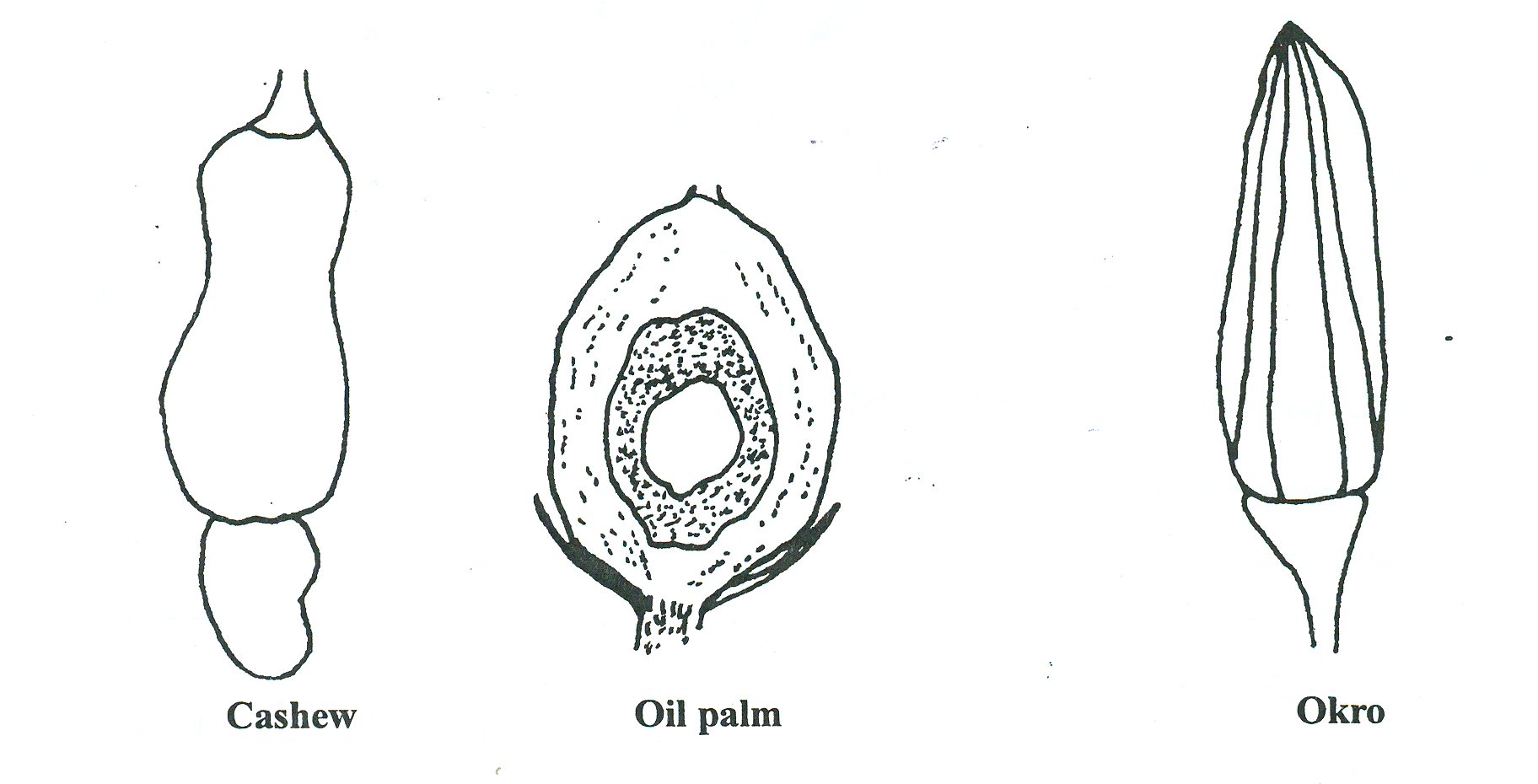
The diagrams below illustrate three different crops.
Study them and answer the questions that follow.
a) State the method of propagating each crop.
b) List three varieties of oil palm.
c) Mention three diseases of okro..
d) State three pre-planting operations that are generally carried out when cultivating okro.
e) List three uses of cashew.

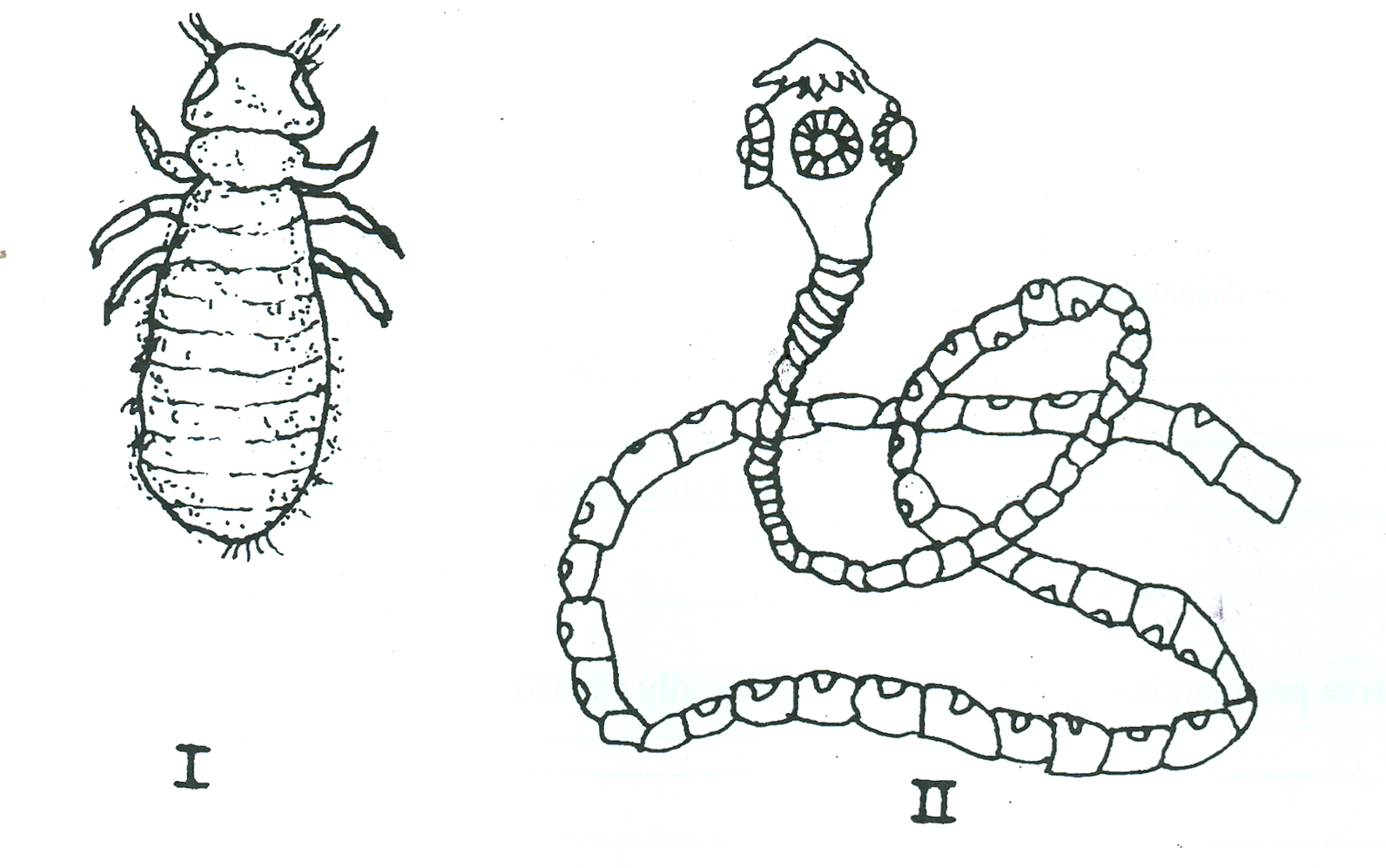
The diagrams below illustrate parasites of farm animals
Study them and answer the questions that follow.
a) Identify the parasites labelled I and II.
b) Mention three external features of the parasite labelled I.
c) Name the part of the body of the host where the parasite labelled II is found.
(i) State four adaptive features of the parasite labelled II on its host.
(ii) List two intermediate hosts of the parasite labelled II.
d) State three effects of the parasite labelled I on its host.
e) State three effects of the parasite labelled I on its host.