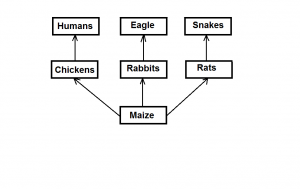
Question 1
Which of the following characteristics is not possessed by most plants? Ability to
Objective
Practice each question, then open it to see the full details.
(a) What is a habitat?
(b) Describe the energy flow in a freshwater habitat.
(c) List (i) three biotic factors; (ii) five abiotic factors which affect plants in freshwater habitat.
(a)(i) What is a joint?
(ii) List three types of movable joints and mention one location in the mammalian body of each type.
(b)(i) Make a labelled diagram, 8-10cm long, of a typical movable joint.
(iii) Explain how the structure of the joint adapts it to its function.
(a) Distinguish between pollination and fertilization in plants.
(b)(i) State five features which ensure cross pollination in plants.
(ii) Name one plant example for each feature
(c)(i) Name three agents of pollination
(ii) State three features of wind-dispersed fruits/seeds.
(a) Describe an experiment to show that green plants require sunlight for photosynthesis. (Details of test for starch not required)
(b) What other conditions are necessary for photosynthesis?
(c) Name the part of a dicotyledonous leaf where most food is manufactured, giving reasons.
(d) What happens to the manufactured food?
(a) Explain briefly the following terms:
(i) phenotype
(ii) hybrid
(iii) dominant character.
(b) Two varieties of maize, one with yellow (Y) grains and the other with purple (y) grains were crossed and all their offspring had yellow grains. When the offspring were crossed with the parent variety with purple grains, half of the resulting offspring had yellow grains, while the other half had purple grains. Using labelled diagrams only;
(i) deduce the genotype of the grains of the first filial generation,
(ii) show the results of the cross between the first filial generation and the parent purple variety.
(c) Mention two ways in which the application of genetics is beneficial to agriculture.
(a) Describe six protective adaptations used by animals against predation and give one example in each case.
(b)(i) What is pollution?
(ii) State six human activities which cause pollution.
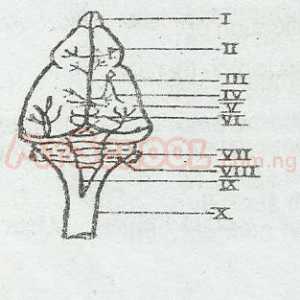
Which of the following is not true about a potted plant left in the laboratory for one week without watering?
Which of the following teeth are well-developed to form the carnassial teeth of carnivorous mammals? The