Question 0Which of the following is most advanced in the evolutionary trend of animals?A.LiverflukeB.EarthwormC.SnailD.CockroachE.Objective Show full explanation
Question 0Which of the following is the lowest category of classification?A.classB.speciesC.familyD.genusE.Objective Show full explanation
Question 0Plants that show secondary growth are usually found among theA.thallophytesB.pteridophytesC.monocotyledonsD.dicotyledonsE.Objective Show full explanation
Question 0The fungi are distinct group of eukaryote mainly because they haveA.sporesB.no chlorophyllC.many fruiting bodiesD.sexual and sexual reproductionE.Objective Show full explanation
Question 0An arthropod that is destructive at early stage of its life cycle isA.butterflyB.mosquitoC.beeD.millepedeE.Objective Show full explanation
Question 0An animal body that can be cut along its axis in any plane to give two identical parts is said to beA.radially symmetricalB.bilaterally symmetricalC.asymmetricalD.symmetricalE.Objective Show full explanation
Question 0Which of the following possesses mammary gland?A.DogfishB.whaleC.sharkD.catfishE.Objective Show full explanation
Question 0The feature that links birds to reptiles in evolution is the possession ofA.feathersB.breakC.skeletonD.scalesE.Objective Show full explanation
Question 0Countershading is an adaptive feature that enables animals toA.fight enemiesB.remain undetectedC.warn enemiesD.attract matesE.Objective Show full explanation
Question 0Which of the following plant structures lacks a waterproof cuticle?A.leafB.stemC.rootD.shootE.Objective Show full explanation
Question 0In the mammalian male reproductive system, the part that serves as a passage for both urine and semen is theA.urethraB.urterC.bladderD.seminal vesicleE.Objective Show full explanation
Question 0In plants which of the following is required in minute quantities for growth?A.CopperB.PotassiumC.PhosphorusD.SodiumE.Objective Show full explanation
Question 0Which of the following organisms is both parasitic and autotrophic?A.SundewB.LorathusC.RhizopusD.TapewormE.Objective Show full explanation
Question 0A function of the hydrochloric acid produced in the human stomach during digestion is toA.neutralise the effect of bileB.coagulate milk protein and emulsify fatsC.stop the action of ptyalinD.break up food into smaller particlesE.Objective Show full explanation
Question 0Which of the following is a polysaccharide?A.GlucoseB.SucroseC.MaltoseD.CelluloseE.Objective Show full explanation
Question 0In the kidney of mammals, the site of ultrafiltration is theA.uriniferous tubuleB.Bowman's capsuleC.loop of HenleD.renal tubuleE.Objective Show full explanation
Question 0Which of the following is involved in secondary thickening in plants?A.Collenchyma and xylem cellsB.Vascular cambiumC.Cork cambium and sclerenchymaD.Vascular cambium and cork cambiumE.Objective Show full explanation
Question 0An example of a fruit that develops from a single carpel isA.okroB.tomatoC.beanD.orangeE.Objective Show full explanation
Question 0Plant growth can be artificially stimulated by the addition ofA.gibberellinB.kininC.abscisic acidD.ethyleneE.Objective Show full explanation
Question 0The autonomic nervous system consists of neurons that control theA.voluntary musclesB.heart beatC.tongueD.handsE.Objective Show full explanation
Question 0The water cycle is maintained mainly byA.evaporation of water in the environmentB.evaporation and condensation of water in the environmentC.condensation of water in the environmentD.transpiration and respiration in plantsE.Objective Show full explanation
Question 0Plants of temperate origin can be grown in tropical areas in the vegetation zones of theA.rain forestB.guinea savannaC.sudan savannaD.montane forestE.Objective Show full explanation
Question 0Organisms living in an estuarine habitat are adapted toA.withstand wide fluctuations in temperatureB.survive only in water with low salinityC.withstand wide fluctuations in salinityD.feed only on phytoplankton and dead organic matterE.Objective Show full explanation
Question 0The presence of stilt roots, pneumatophores, sunken stomata and salt glands are adaptive features of plants found in theA.tropical rainforestB.mangrove swampsC.gresslandD.montane forestE.Objective Show full explanation
Question 0Which of the following animals can exist solely on the water they get from food and metabolic reactions?A.forest arboreal dwellerB.Desert dwellersC.forest-ground dwellerD.rainforest dwellersE.Objective Show full explanation
Question 0The most likely first colonizers of a bare rock areA.mossesB.fernsC.lichenD.fungiE.Objective Show full explanation
Question 0The carrying capacity of a habitat is reached when the population growth begins toA.increase slowlyB.increase exponentiallyC.slow downD.remain steadyE.Objective Show full explanation
Question 0The abiotic factors that control human population includeA.disease and famineB.space and rainfallC.flooding and earthquakeD.temperature and diseaseE.Objective Show full explanation
Question 0An indigenous method of renewing and maintaining soil fertility is byA.clearing farms by burningB.planting one crop typeC.adding inorganic fertilizers yearlyD.crop rotation and shifting cultivationE.Objective Show full explanation
Question 0The diseases caused by water-borne pathogens includeA.gonorrhoea and poliomyelitisB.typhoid and syphilisC.tuberculosis and choleraD.typhoid and choleraE.Objective Show full explanation
Question 0Which of the following is true in blood transfusion?A.person of blood group AB can donate blood only to another person of blood group ABB.persons of blood groups A and B can donate or receive blood from each otherC.A person of blood group AB acn receive blood only from persons of blood group A or BD.A person of blood group O can donate only to a person of blood group OE.Objective Show full explanation
Question 0A yellow maize is planted and all the fruits obtained are of yellow seeds. When they are croos-bred, yellow seeds and white seeds are obtained in a ratio 3:1 . The yellow seed is said to beA.non-heritableB.sex-linkedC.a recessive traitD.a dominant traitE.Objective Show full explanation
Question 0When a colour-blind man marries a carrier woman. What is the probability of their offspring being colour blind?A.25%B.50%C.75%D.100%E.Objective Show full explanation
Question 0The correct base pairing for DNA isA.adenine → thymine and guanine → cytosineB.adenine → guanine and thymine → cytosineC.adenine → cytosine and guanine → thymineD.adenine → adenine and cytosine → cytosineE.Objective Show full explanation
Question 0The short thick break in birds is an adaptation forA.crushing seedsB.sucking nectarC.tearing flashD.straining mudE.Objective Show full explanation
Question 0The basking of Agama lizards in the sun is toA.change the colour of their bodyB.raise their body temperature to become activeC.fight to defend their territoriesD.attract the female for courtshipE.Objective Show full explanation
Question 0The significance of a very large number of termites involved in nuptial swarming is toA.provide birds with plenty of foodB.ensure their perpetuation despite predatory pressureC.search for a favourable place to breedD.ensure that every individual gets a mateE.Objective Show full explanation
Question 0The use and disuse of body parts and the inheritance of acquired traits were used to explainA.Darwin's theoryB.Lamarek's theoryC.genetic driftD.gene flowE.Objective Show full explanation
Question 0From his study of Galapagos finches, Darwin derived his theory of evolution fromA.comparative anatomyB.comparative physiologyC.fossil remainsD.comparative embryologyE.Objective Show full explanation
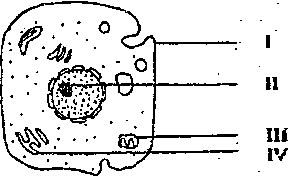
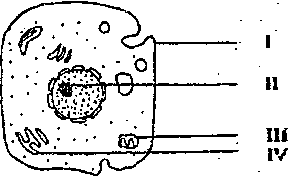
Question 0Use the diagram above to answer this question. The organelle responsible for heredity is labelledA.lB.llC.lllD.IVE.Objective Show full explanation
Question 0Use the diagram above to answer this question. The part labelled IV is theA.mitochondrionB.cell wallC.endoplasmic reticulumD.nucleusE.Objective Show full explanation
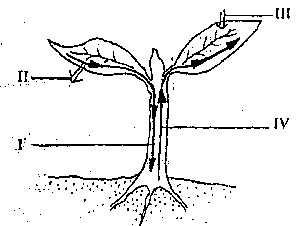
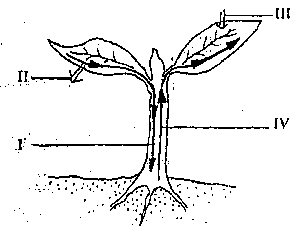
Question 0Use the diagram above to answer this question.Arrows represent directional movement materials. Transportation in the xylem is represented byA.IB.IIC.IIID.IVE.Objective Show full explanation
Question 0Use the diagram above to answer this question. Arrows represent directional movement materials. The arrow labelled ll represents theA.release of oxygenB.intake of carbon (IV) oxideC.movement of photosynthatesD.movement of nutrientsE.Objective Show full explanation
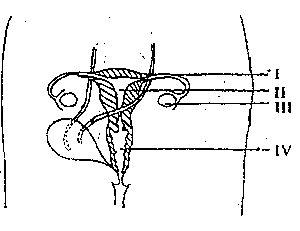
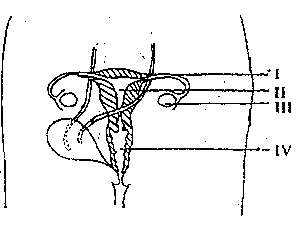
Question 0Use the diagram above to answer this question. The developing embryo is usually contained in the part labelledA.IVB.IIIC.IID.IE.Objective Show full explanation
Question 0Use the diagram above to answer this question. The function of the part labelled lll is toA.produce egg cellsB.protect sperms during fertilizationC.secrete hormones during coitusD.protect the developing embryoE.Objective Show full explanation
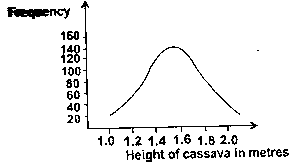
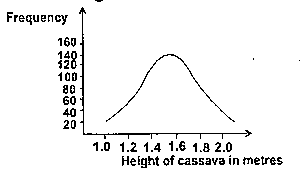
Question 0Use the diagram above to answer this question. The graph illustratesA.the highest frequency for height of 2 metresB.a discontinuously varying characterC.a continuously varying characterD.total yield in a cassava farmE.Objective Show full explanation
Question 0The largest number of cassava plants has an approximate height ofA.1.4mB.1.6mC.1.8mD.2.0mE.Objective Show full explanation
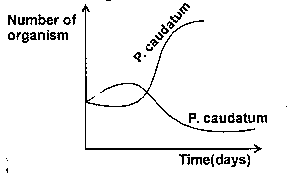
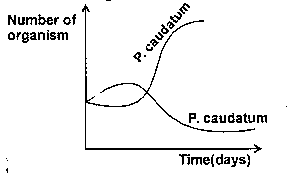
Question 0The type of interaction shown is referred to asA.interspecific competitionB.intraspecific competitionC.mutualismD.cooperationE.Objective Show full explanation
Question 0In the diagram, which of the following statement is true of the interactionA.P aurelia is better adapted for obtaining food than P caudatumB.P caudatum is better adapted for obtaining food than P. aureliaC.both organisms cannot coexistD.both organisms cannot reproduceE.Objective Show full explanation